Many years ago, I was picketing Jessica McClintock’s
boutique on Union Square in San Francisco with about 25 other people. McClintock makes these prom/bridesmaid
dresses that look like they belong in Gone With the Wind, and she had
contracted with a local sweatshop to manufacture them. The contractor had gone out of business and
disappeared without paying the workers, who were all Asian immigrant
women. A group called Asian Immigrant Women’s Advocates, AIWA, helped the workers
organize to convince McClintock to pay the back wages and accept responsibility
for the conditions of the women sewing her clothes. Several years after this particular picket,
the workers finally won their demands.
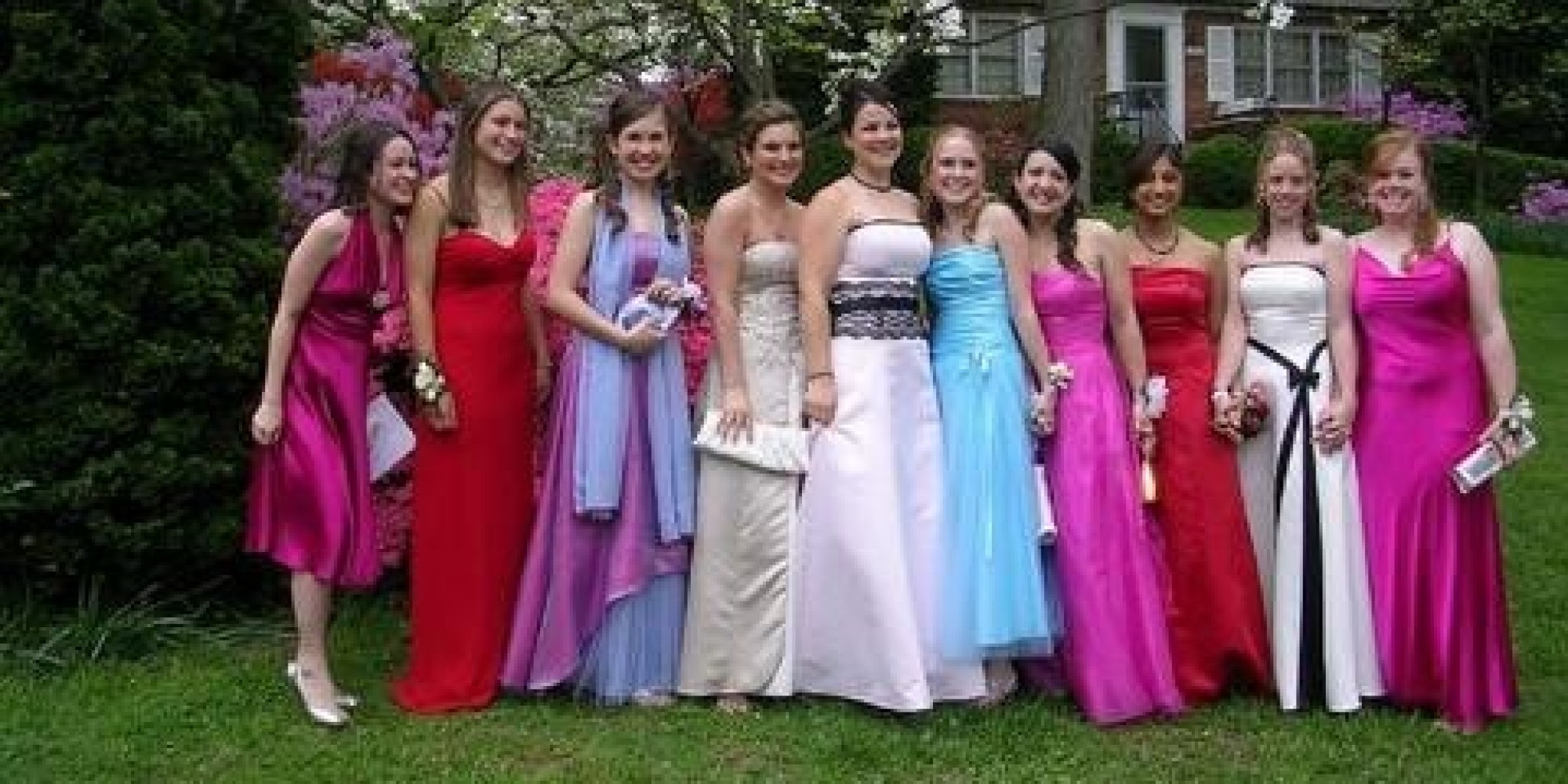
AIWA had a lot of funny chants for these actions. In addition to the old standby, “Jessie,
Jessie, you’re no good, pay your workers like you should,” my personal favorite
was “Greedy, tacky and unfair, I wouldn’t buy her underwear.” Another one, adapted from what I believe was a
then-popular football cheer, went “U-G-L-Y Jesse has no alibi, she’s ugly! She’s
ugly!” (According to Yahoo Answers, the
cheer originated with a movie called “Wildcats” in which Goldie Hawn plays a
football coach. Never heard of it but
think I’ll rent it soon.) Now I was never a big fan of that one but in the mouths of Asian women workers,
it was pretty clear that UGLY referred to not paying your
workers, and maybe a little dig at the clothes, which are unquestionably
hideous (see photographic evidence above). But some men on the picket line
decided to amplify the message, yelling, “Yeah, she’s downright homely. I wouldn’t touch her with a ten-foot pole.” These men, I might mention, would not have
been mistaken for Robert Redford on the street.
My friend and I told them to stop, that the chant was not
an excuse for misogyny. I don’t remember
if they did or didn’t.
I do remember what happened when we tried to talk to some straight
men at an antiwar march in 1991. This
was during the first US invasion of Iraq and they were carrying a big cartoon cutout
depicting George HW Bush f**king Saddam Hussein in the ass (raping? sodomizing?
hard to know what to call it, but we did not want to look at it). We told them it was homophobic and offensive.
They’re response was something very
pithy like, “Get lost, bitches.”
My friends and I used to get in knock-down-drag-out fights
with members of the so-called “Revolutionary Communist Party” back in the
eighties and nineties when their official position was that gay people were a
product of bourgeois decadence and would go to reeducation camps after the
revolution. During one of those
arguments, the poor guy who had made the mistake of trying to sell us his
newspaper told my friend Daniel to “stop thinking with his genitals.”
I could go on and on but you get the point. I’ve never been part of, nor heard of, a
social movement that didn’t have to struggle with misogyny, homophobia, ableism
(oh, sorry, we can’t hold our meetings in an accessible space), racism,
classism, fat oppression. There are two
simple reasons for that: the movements take place in our society, which is rife
with all those ways of hurting one another; and they are made up of human
beings, who are (mis)educated and affected by our society.
These moments reeled through my head as I read the hit piece on Anonymous in the current issue of The Nation, which was one of the
more widely shared links in my activist circles at the end of last week. Like many of my friends, I was initially
gratified to read all the dirt Adrian Chen dishes about the hacker group. I’ve never loved technofixes for social
problems. I’ve written before about the
problems I have with hacking as a major form of activism:
it’s solitary, covert and expert-driven.
The very Anonymous nature of Anonymous and its ilk make it virtually
impossible for them to spark a movement, because where would you find them? For
those of us who are not supergeeks, there’s no way to join. And yes, the people who are supergeeks are most likely to be young, white men who play the
kinds of video games that produced GamerGate.
I don’t like Guy Fawkes masks; I think they’re creepy and
I don’t want to be in street actions with people who don’t trust me enough to
let me see their faces. I also don’t like
people who claim to “be” the movement or its leaders, as I have heard Anonymous
people do – or more accurately, people who claim to be Anonymous, because of
course we cannot know who really is Anonymous.
So it was very tempting to join the chorus of, “Look, see,
they really are Nazis and misogynist trolls,” let’s disavow them.
And yet, in a cooler moment, I feel Chen goes too
far. His piece is called, “The truth
about Anonymous’s Activism,” but it should be called “Some (more) truths about Anonymous’s
activism.” It’s interesting and
important to know that one of the first Anonymous groups “invaded the online
teens’ game Habbo Hotel and formed their matching avatars into a giant swastika
while spewing racial epithets.”

Anonymous, by its name and its principles, is a loose network
with no gatekeepers and no accountability.
That’s a good enough reason for me not to work with them, and to
discourage anyone who listens to me from doing it. But as the examples I started this piece with
attest, Anonymous doesn’t have a monopoly on people sincere activists shouldn’t
be associated with. People were raped at
Occupy camps. One of the founders of
Common Ground became (or turned out to be) a government agent. Moreover, many respected activists have dubious
pasts. Dan Ellsberg worked at the
Pentagon. Ed Snowden donated to Ron Paul’s
campaign. Diane Ravitch promoted charter
schools. The question can’t be who they
were, it’s got to be who they are now.
Hacking is well-known as a male-dominated and white-dominated culture
and much of Anonymous seems to fit right in.
But hackers are also doing some of the most innovative and accessible
community-building projects around, in the form of “hackerspaces” where they share
skills, equipment and space, often free or very cheap. Noisebridge in San Francisco has an
anti-harassment policy on the website for its 5200-square foot space which “contains
an electronics lab, machine shop, sewing/crafting supplies, two classrooms,
conference area, library, darkroom, and kitchen.” Oakland’s “inclusive hacker space”, SudoRoom, is part of a new “collective of collectives” that just got a glowingwriteup in the East Bay Express. I’m eager to check it out although the one
time I was there for a meeting, when I think they’d just moved in, I found it
about the moldiest place I’ve ever been.
Anonymous has done some messed up things and they’ve done
some very good things (like exposing evidence of the Steubenville rape and
taking down the sites of credit card companies that refused to process
donations to Wikileaks). I think denouncing
Anonymous at a time when the FBI is using it to stir up fear and justify bringing more “intelligence
specialists” to Ferguson is a mistake. Call them out on their shit, yes, but don’t hit them when
they’re down. But we outside agitators
need to stick together.


